Choosing a new community in Bonita Springs or Estero can feel simple at first. You tour a model, compare amenities, and picture your life there. But in fast-growing Southwest Florida, the real story often sits behind the brochure. If you want to make a smart decision, you need to look at the community plan, lot details, flood considerations, and contract terms just as closely as the finishes. Let’s dive in.
Why due diligence matters here
Bonita Springs and Estero are active growth corridors, and local planning reflects that reality. The City of Bonita Springs Citywide Mobility Plan is focused on safety, connectivity, smart growth, and resilient design.
In Estero, the planned-development review process requires detailed materials like a master concept plan, phasing plan, traffic impact statement, and environmental documentation. According to Estero’s planned development application requirements, buyers should think beyond the sales center and evaluate how a community is designed to function over time.
That matters because what you buy is not just a house. You are also buying into roads, drainage, future phases, amenity timing, and association obligations.
Compare the builder model first
Not every new-construction community offers the same level of flexibility. The National Association of Home Builders describes production builders as community builders who typically offer a set range of plans and options, while custom builders usually create one-off homes with much more design freedom.
In Bonita Springs and Estero, many communities fall somewhere in the middle. You may see a builder-controlled process with more personalization than a basic tract home, but less flexibility than a true custom build. That distinction can shape everything from timeline to pricing to how much control you have over layout and design selections.
For example, Verdana Village in Estero promotes flexible plan series and design choices, while Bonita Del Sol in Bonita Springs highlights one- and two-story plans with personalization features. Both may offer meaningful choices, but neither should be mistaken for a full custom experience.
Questions to ask about builder flexibility
- How many floor plans are available on your chosen lot type?
- Which features are standard, optional, or unavailable?
- Can structural options change after contract?
- Are certain design choices tied to specific elevations or lot positions?
- Who decides the final home siting on the lot?
Review the master plan, not just the clubhouse
Amenities are often a major reason buyers choose planned communities. But the key is not just what is shown in renderings. It is also what is built now, what is planned later, and how the full community will develop in phases.
Estero’s planned-development application materials show the depth of information that exists behind the scenes. These materials can include the master concept plan, land uses, phasing, topography, wetlands, flowways, stormwater management, sewer and water planning, and traffic analysis.
That means your evaluation should go beyond “Does this community have a pool?” You should also ask where future phases will go, what uses may be added later, how traffic will move, and whether nearby parcels could change your day-to-day living experience.
Amenity packages can differ more than they seem
The range of amenity offerings in this corridor is wide. Verdana Village lists indoor pickleball, basketball and tennis courts, a fitness center, movement studio, café, restaurant, resort-style pool and spa, dog park, and a secondary west-village amenity center.
Vivid Shores in Bonita Springs is noted in the research for a large lakefront amenity campus, clubhouse space, restaurant and bar service, pools, sports courts, and a boat dock. By contrast, Bonita Del Sol presents a smaller-scale model with 248 future front doors, no CDD, private amenities, and a community pool.
A smaller amenity package is not necessarily a negative. It may simply align better with your budget, maintenance expectations, or preferred pace of community life.
Ask when amenities will actually open
Timing matters just as much as the amenity list itself. A community may begin home sales and closings long before every feature is finished.
For example, RiverCreek’s 2025 update shows a phased lifecycle in action, with the clubhouse open and 472 of 554 homes sold by April 2025. That is a useful reminder to ask which amenities are open now, which are under construction, and which remain part of a future phase.
Study the lot, orientation, and outdoor use
In Southwest Florida, lot details can have a major impact on comfort and livability. Sun exposure, glare, lanai usability, and privacy may shape your daily experience more than a design-center upgrade package.
The U.S. Department of Energy explains that south-facing windows can help admit winter sun while limiting direct summer sun when properly shaded. The same guidance notes that east- and west-facing windows can increase glare and heat gain, which is especially important in Florida.
The research also cites University of Florida/IFAS energy guidance that recommends limiting east- and west-facing windows and notes that trees on those sides can help with shade. In practical terms, that means you should confirm rear exposure, afternoon sun on the lanai, pool placement options, driveway orientation, and whether the lot supports the outdoor living features you want.
Pulte also states that the actual position of the house on the lot is determined by the site plan and plot plan. So even if you love a model, you still need to verify how your specific homesite will sit.
Lot review checklist
- Rear exposure and afternoon sun
- Privacy from adjacent homes or roads
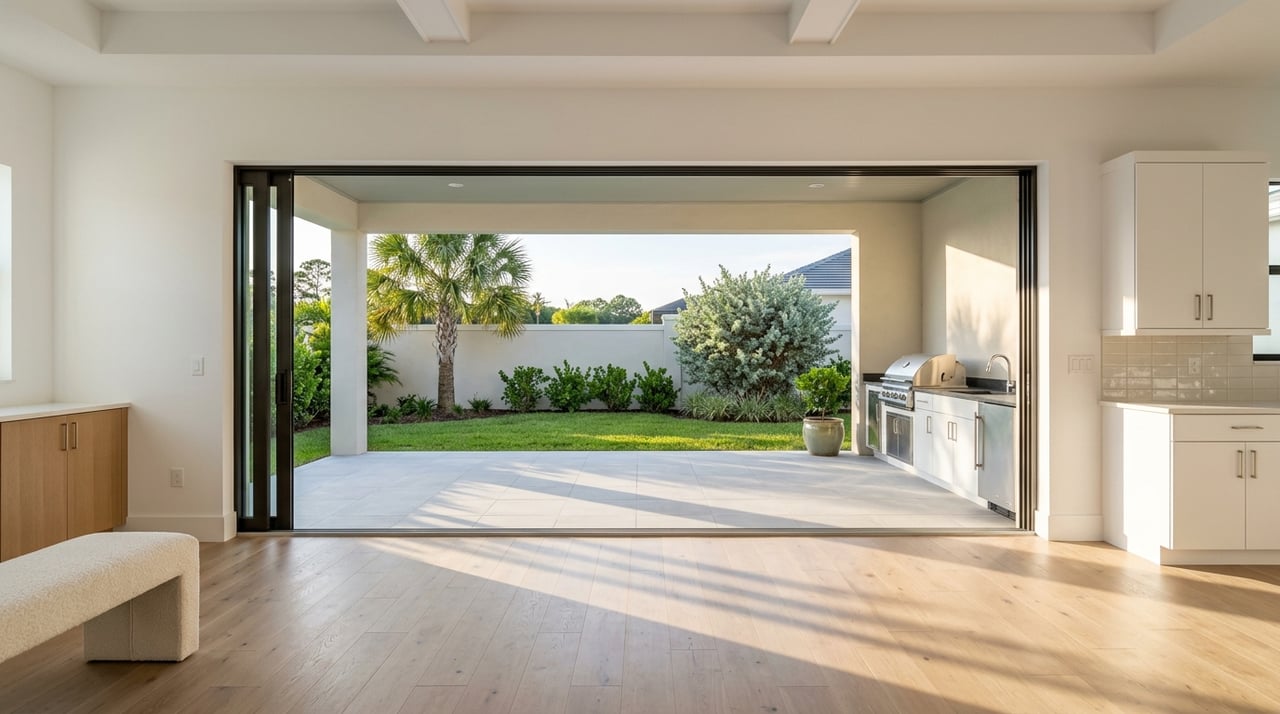
- Space for a pool or outdoor kitchen
- Driveway orientation and guest parking ease
- Water, preserve, or internal-street view
- Drainage pattern around the lot
Look closely at flood and drainage factors
Floodplain management is a serious issue in Estero because of its proximity to the Estero River, Imperial River, and Estero Bay, along with the area’s flat topography and subtropical climate. The Village of Estero’s flood protection guidance makes clear that these factors require careful planning and review.
If you are comparing communities in Bonita Springs and Estero, ask for the flood zone, finished-floor elevation, and drainage plan for the homesite you are considering. If the lot backs to a lake or preserve, ask whether there are added stormwater-management or insurance implications.
This is one of the easiest places for buyers to focus only on the view and miss the bigger picture. A beautiful setting can still require added questions about water management and future costs.
Understand the HOA, CDD, and records
Association documents deserve the same attention as the floor plan. In Florida, homeowners’ association disclosure rules require a disclosure summary before signing in communities subject to the statute, and timing matters if that summary is not delivered in advance.
Florida law also requires associations to maintain official records such as plans, permits, warranties, contracts, and insurance policies. Under Florida Statute 720.303, records must be available to parcel owners within the statutory inspection timeline.
For you as a buyer, the practical takeaway is simple. Review the declaration, bylaws, budget, reserve information, management agreement, and architectural guidelines before you get too far down the road.
Why fee structure matters
Communities with larger amenity packages often carry a different funding and maintenance profile than smaller communities. The presence or absence of a CDD can also affect your monthly and annual carrying costs.
That is why comparing only the base home price rarely gives you a complete picture. You want to evaluate the total ownership structure, including assessments, amenity maintenance, and future community obligations.
Read the contract with extra care
Builder contracts are not all the same, and they often give the builder more flexibility than buyers expect. That makes contract review one of the most important parts of evaluating a new community.
Florida’s mandatory builder warranty law covers newly constructed homes for certain code-related construction defects for one year after conveyance or initial occupancy unless the builder’s express warranty provides equal or greater protection. Some builders advertise broader coverage. For example, Pulte promotes a 10-year limited structural warranty and a build-quality process that includes field-manager communication, orientation, and final inspection.
Just as important, builder materials may also state that amenities are based on current development plans and may change. Pulte’s community and plan disclaimers highlight why you should confirm what is a firm obligation versus what is only part of the current plan.
Contract items to compare
- Deposit structure and refund terms
- Builder rights to substitute materials
- Builder rights to modify plans or amenities
- Incentive terms tied to preferred lender or title services
- Arbitration or dispute-resolution clauses
- Warranty coverage and claim procedures
- Whether amenity completion is guaranteed or only planned
A practical way to compare communities
If you are trying to narrow down several communities, it helps to use the same scorecard for each one. The clearest comparison points, based on local planning documents, builder materials, and Florida law, are builder flexibility, amenity scale and timing, lot orientation, flood and drainage exposure, HOA or CDD burden, and contract language.
When you compare communities this way, you move from reacting to finishes and marketing to making a clear, informed decision. That is especially valuable in Bonita Springs and Estero, where growth, phasing, and site conditions can have a lasting effect on ownership.
If you want a calm, detailed review of new-construction options in Bonita Springs or Estero, Daniel Abreu can help you compare communities, lot factors, and contract details with a more strategic lens.
FAQs
What should you review before buying in a new Bonita Springs or Estero community?
- You should review the master plan, phasing, amenity timing, lot orientation, flood and drainage details, HOA documents, and the builder contract.
How important is lot orientation in Bonita Springs and Estero new construction?
- Lot orientation can strongly affect afternoon heat, glare, lanai comfort, privacy, and your ability to add outdoor living features later.
What is the difference between production and custom builders in Bonita Springs and Estero?
- Production builders usually offer a set menu of plans and options, while custom builders typically create more individualized homes with greater design flexibility.
Why do flood and drainage questions matter in Estero communities?
- Estero’s rivers, bay access, flat terrain, and subtropical climate make floodplain management and drainage planning important parts of evaluating a homesite.
What HOA documents should you ask for in a Bonita Springs or Estero community?
- You should ask for the declaration, bylaws, budget, reserve information, management agreement, and architectural rules, along with any required disclosure summary.
Can planned amenities change after you buy in a new community?
- Yes, builder materials may state that amenities are based on current development plans and can change, so you should confirm what is actually guaranteed in the contract.