Florida Probate Real Estate: What Heirs Need to Know
If you've inherited real estate in Florida, you've likely run into the word "probate." It can feel intimidating, but with the right roadmap, Florida probate for real estate is manageable and often faster than people expect. This guide explains what heirs actually need to know to move an inherited SWFL property through probate and toward sale or retention.
What Is Probate and Why Does Real Estate Need It?
Probate in Plain English
Probate is the court-supervised process of settling a decedent's estate — paying debts, verifying the will, and transferring assets to heirs. Real estate usually must go through probate to get a clean, marketable title to the new owners.
When Probate Can Be Avoided
Probate may be avoided if the property was held in a living trust, as joint tenants with right of survivorship, or through a Lady Bird Deed (enhanced life estate deed). Otherwise, probate is typically required.
Types of Florida Probate
Formal Administration
The most common form. Used for most estates; a personal representative is appointed and handles the estate under court supervision. Typically takes 6-12 months.
Summary Administration
Available for estates under $75,000 or where the decedent has been deceased over two years. Faster and less expensive, but real estate can still be addressed.
Disposition Without Administration
Limited to very small estates with specific debt profiles — rarely applies to real estate cases.
Who's Who in Florida Probate
Personal Representative
Named in the will (or appointed by the court if no will). Manages the estate, including authorizing a real estate sale.
Heirs and Beneficiaries
The people entitled to receive property under the will or Florida's intestacy statutes if no will exists.
Probate Attorney
Florida law generally requires the personal representative to be represented by counsel.
Creditors
Valid creditors have a limited window to file claims against the estate, which must be resolved before distribution.
Can You Sell During Probate?
Yes — With the Right Steps
Selling during probate is common in Florida. The personal representative typically obtains court authority (or acts under the will's power-of-sale provision) and lists the home for sale. Closing usually happens after court approval of the sale.
Timing a Listing
Many personal representatives list early in the probate process to align the closing with the end of creditor claims and tax work. An experienced probate agent can help pace this correctly.
Pricing and Marketing
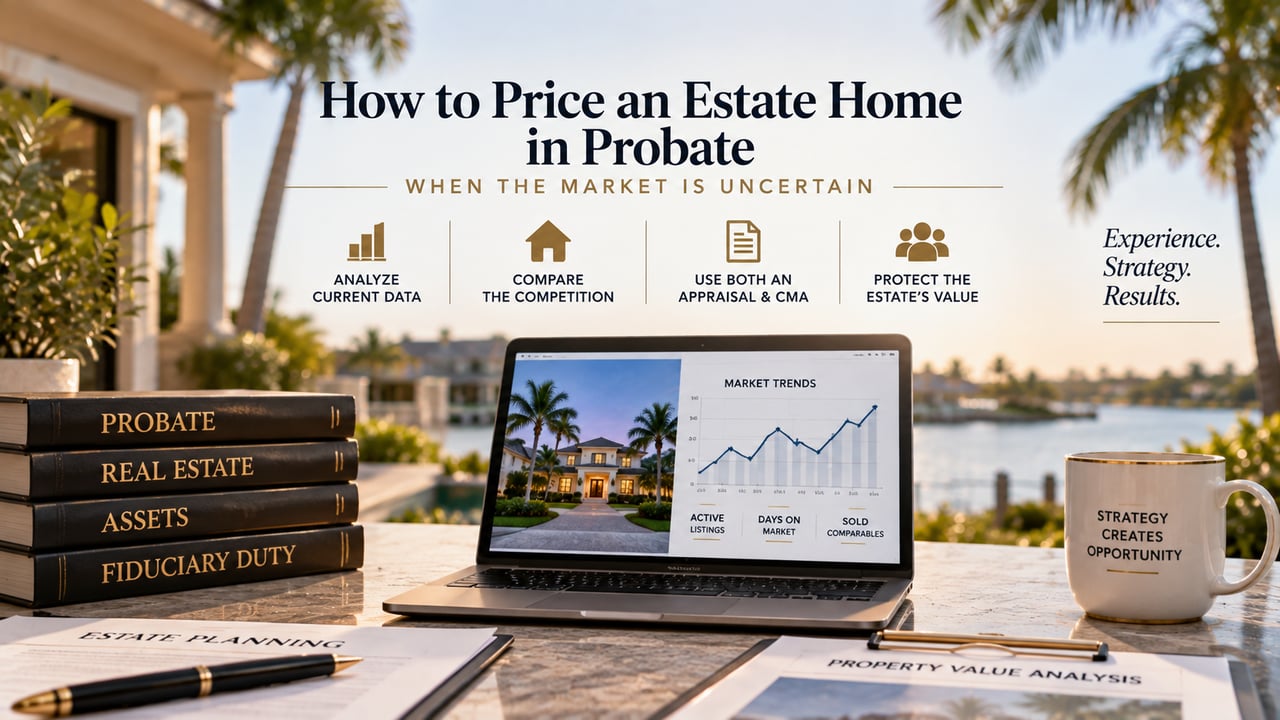
Probate homes often need cleaning, minor updates, and careful positioning. The right pricing strategy is critical — overpricing leads to stale listings that hurt sale value.
What If There's No Will?
Intestate Succession in Florida
Florida's intestacy statutes dictate who inherits — typically the surviving spouse and descendants. Rules vary based on whether both parties had children together and from prior relationships.
Multiple Heirs, One House
When several heirs inherit a single property, coordination is essential. Options include selling and splitting proceeds, a buyout between heirs, or a court-ordered partition if disputes arise. See our How to Sell an Inherited Home in SWFL for a practical walk-through.
Taxes and Probate Real Estate
Stepped-Up Basis
Inherited property receives a stepped-up cost basis equal to fair market value at the decedent's date of death, minimizing capital gains on a near-term sale.
No Florida Estate or Inheritance Tax
Florida imposes neither. Federal estate tax applies only to very large estates above the federal exemption.
Property Tax Changes
When title transfers, property tax assessments can reset. This may increase taxes significantly, especially on long-held homestead properties. Learn more in Tax Implications of Selling an Inherited Home in Florida.
Common Pitfalls to Avoid
Deferring Maintenance During Probate
Vacant homes can deteriorate quickly in Florida's climate. Neglect hurts resale value.
Underinsuring the Home
Vacant dwelling policies cost more but protect the estate.
Rushing the Sale Without Strategy
Skipping repairs or staging can cost tens of thousands in final sale price. The right local agent pays for themselves.
Miscommunicating With Heirs
Keep all heirs informed. Most probate real estate conflicts come from poor communication, not genuine disagreement.
Working With a Probate-Savvy Agent
Probate Timelines and Disclosures
Florida probate sales have specific disclosure nuances. A seasoned agent knows how to structure listings and buyer conversations accordingly.
Coordination With Counsel
We regularly coordinate with probate attorneys to align listing, contract, and closing around court schedules.
Empathy Plus Execution
Most probate sellers are grieving. A great probate agent is discreet, patient, and organized.
Frequently Asked Questions
How long does Florida probate take?
Summary administration can wrap in a few months; formal administration typically takes 6-12 months.
Can I list the home before probate is complete?
Usually yes, once the personal representative has authority. Closing occurs after required court steps.
Do all heirs need to agree to sell?
Under a will with power of sale, the personal representative typically has authority. When heirs co-inherit without clear authority, consent or a partition action may be needed.
What if the home has a mortgage?
The mortgage survives the owner's death. Options include refinancing by an heir, assumption, or sale with payoff.
Does the estate pay closing costs?
Yes — customary seller closing costs are paid from sale proceeds before distribution to heirs.
Get a Trusted SWFL Probate Real Estate Partner
The Abreu Group helps Florida heirs navigate probate real estate from listing strategy through closing, coordinating with your probate attorney every step. Contact Daniel Abreu today for a confidential, no-pressure consultation on your inherited property.