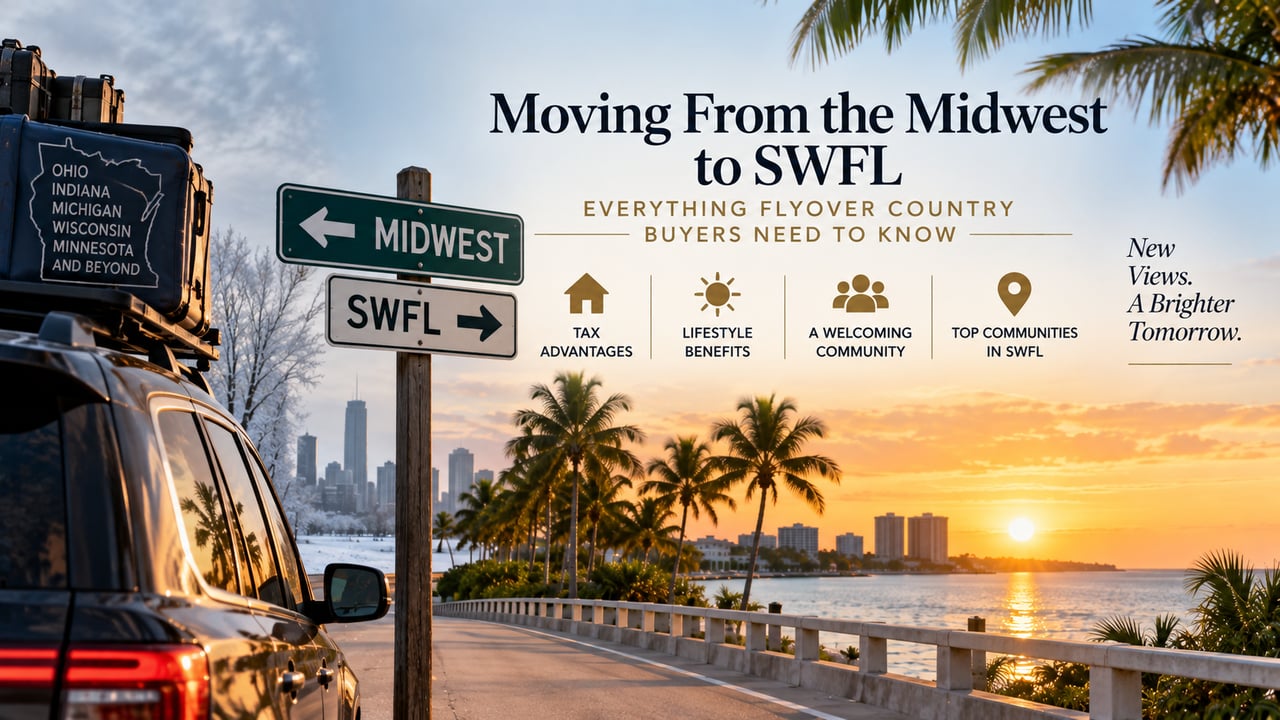
The Midwest is one of the largest and most consistent sources of SWFL real estate buyers — Ohio, Indiana, Michigan, Wisconsin, and Minnesota all send significant numbers of buyers to the Naples and Fort Myers markets every year. Here is the comprehensive guide that covers everything Midwestern buyers consistently get wrong — and right — about this move.
The Midwest-to-SWFL Migration Is Bigger Than Most People Realize
When people think about where SWFL buyers come from, New York and the Northeast get the most attention — and for good reason, they are significant. But the Midwest is equally important and, in some ways, more consistently represented across all price points and all communities in the region. Ohio alone — which we covered in a dedicated post — sends a substantial buyer contingent. But add Indiana, Michigan, Wisconsin, Minnesota, and the broader Midwest to the picture and you have a buyer population that shapes the SWFL market significantly.
I work with Midwestern buyers regularly — from Columbus, Indianapolis, Grand Rapids, Milwaukee, Minneapolis, and dozens of smaller Midwestern cities — and the patterns in what they expect, what they find, and what surprises them are consistent enough to be worth addressing comprehensively. This is the guide I wish every Midwestern buyer had before they made their first trip south.
The Financial Case: State by State
The Income Tax Picture
The income tax advantage of Florida residency varies by Midwestern state but is meaningful across the board:
- Michigan: flat 4.25 percent state income tax — on $150,000 of income, establishing Florida residency saves approximately $6,375 per year
- Wisconsin: graduated rates up to 7.65 percent — on $150,000, potential savings of $8,000 to $11,000 per year
- Minnesota: one of the highest state income tax rates in the country, up to 9.85 percent — on $150,000, potential savings of $10,000 to $15,000 per year
- Indiana: flat 3.15 percent — a more modest but still meaningful saving
- Ohio: rates up to 3.99 percent as covered in our Ohio post
In every case, the income tax savings compound annually and combine with Florida's exemption on Social Security and pension income to create a financial picture that is particularly compelling for retirees and near-retirees.
The Property Tax Reality
Midwestern property tax rates are generally high relative to SWFL's Lee and Collier County effective rates. Milwaukee County, for example, has effective property tax rates of 2.0 to 2.5 percent. Comparable SWFL properties carry rates of 0.9 to 1.3 percent. Combined with Florida's homestead exemption and Save Our Homes cap for primary residents, the property tax savings are real and meaningful over a long ownership period.
The Lifestyle Adjustment: Midwest vs. SWFL
The Weather Is the Point — and It Is More Dramatic Than You Think
Midwesterners understand intellectually that Florida winters are warm. What they typically underestimate is the psychological liberation of eliminating harsh winters entirely from their lives. The cumulative weight of Midwest winters — the grey skies, the cold, the snow, the ice, the school closings, the commute anxiety, the wardrobe burden — is something most people do not fully account for until it is gone. The first winter as a Florida resident is frequently described by Midwestern transplants as among the most genuinely transformative experiences of the move.
The summer adjustment — heat, humidity, afternoon thunderstorms — is real but typically easier than Midwesterners fear. The pattern of morning outdoor activity followed by air-conditioned midday is learnable, and most Midwestern transplants acclimate faster than they expected.
The Pace of Life
The Midwest has a pace of life that varies enormously by city — Minneapolis feels different from a small Indiana town — but in general, Midwesterners tend to experience SWFL as meaningfully slower and less rushed than what they knew at home. For some buyers, this is exactly what they are seeking. For buyers who thrive on the pace of a larger Midwestern city — Chicago, Minneapolis, Milwaukee — the adjustment to SWFL's more deliberate tempo can take longer.
The Midwestern Community You Find Here
One of the more pleasant surprises for Midwestern transplants is how large and well-established the Midwest diaspora community is in SWFL. Particularly in Fort Myers and Bonita Springs, the Midwestern transplant community is extensive. Across the region, connections to home state university networks — Michigan Wolverines, Wisconsin Badgers, Michigan State Spartans, Ohio State Buckeyes — create instant social bonds with other transplants who share the same cultural touchstones. The social fabric of SWFL is, in many ways, a patchwork of transplant communities, and Midwestern buyers integrate into it faster than they often expect.
Where Midwestern Buyers Tend to Land in SWFL
Based on years of working with buyers from across the Midwest, here is the settlement pattern I observe:
- Fort Myers — Gateway, Three Oaks, Estero: the most popular destination for Ohio, Indiana, and Michigan buyers in the $350,000 to $600,000 range. The master-planned community infrastructure, the school quality, and the community culture map well onto what Midwestern suburban buyers are accustomed to.
- Bonita Springs — The Brooks, Palmira, Pelican Landing: popular with Wisconsin and Minnesota buyers who are often later-stage retirees looking for a full-service gated community lifestyle at a price point between Fort Myers and Naples.
- Cape Coral: particularly popular with Michigan and Indiana buyers who want the waterfront lifestyle — the boat-behind-the-house experience — at price points that are genuinely more accessible than comparable waterfront in Naples or Fort Myers.
- Naples — Lely Resort, East Naples communities: for Midwestern buyers with higher budgets who want the Naples lifestyle at relative value compared to the core Naples luxury communities.
And here is something worth knowing before you buy: my Buyer Protection Guarantee means that if you purchase with me and decide within 24 months that the home is not the right fit, I will list and sell it for just 1% commission — no reason required. Real protection for a real commitment. Learn more at theabreugroup.com/buyer.
Ready to make your move in Southwest Florida? Let's talk.
Whether you're buying, selling, managing an estate, navigating a divorce, or just want a straight read on the market — I'm here.
Call or text: 727.638.1704
Email: [email protected]
Or reach out at theabreugroup.com
— Daniel
Frequently Asked Questions
Q: How far is Southwest Florida from the Midwest by flight?
RSW Airport in Fort Myers has direct flights to Columbus, Indianapolis, Detroit, Milwaukee, Minneapolis, and other major Midwestern hubs. Flight times range from approximately 2 to 3 hours depending on the departure city. The direct flight access is one of the most important practical quality-of-life factors for Midwestern buyers who will be maintaining connections to family and friends back home.
Q: Is SWFL a good place to retire for Midwesterners on a fixed income?
It can be — particularly in Fort Myers, Cape Coral, and the Bonita Springs/Estero corridor where the price points are more accessible than Naples. Florida's tax advantages on Social Security and pension income are particularly valuable for retirees. The key variables are insurance costs (higher than most Midwestern states), HOA fees (common in SWFL and variable), and whether the lifestyle matches what the individual or couple actually values. I help every Midwestern retiree client model the full cost-of-living picture before they commit to a purchase.
Q: Does SWFL have any Midwest-style weather events I should know about?
Southwest Florida does not have tornadoes, ice storms, blizzards, or the severe winter weather that defines Midwestern winters. The primary weather events to understand are: afternoon thunderstorms during the summer rainy season (June through September), the occasional tropical storm or hurricane during the June through November hurricane season, and the rare cold snap during winter that can briefly bring temperatures into the 40s. For Midwesterners accustomed to extended cold and snow, the weather comparison is almost uniformly favorable.
Q: How do I establish Florida residency for tax purposes when moving from a Midwestern state?
The process involves spending more than 183 days per year in Florida, changing your driver's license and vehicle registration to Florida, updating your voter registration, filing a Declaration of Domicile with the county clerk, and updating your primary address for financial accounts and other records. Midwest states — particularly Wisconsin and Minnesota with their high tax rates — may audit residency changes, so documenting your Florida presence carefully in the early years of the transition is important. Consult with a CPA familiar with multi-state residency transitions before completing the process.