Selling a Tenant-Occupied Home in Southwest Florida: What Landlords Need to Know
Selling a tenant-occupied property in Florida requires navigating lease terms, Florida landlord-tenant law, showing logistics, and buyer expectations — all while maintaining a functional landlord-tenant relationship. Here is exactly what to expect and how to manage the process so everyone gets what they need.
Owning a Rental in SWFL and Ready to Sell? Here's What's Different
Selling a tenant-occupied home is fundamentally different from selling a vacant or owner-occupied home in Southwest Florida. The logistics, the legal framework, the buyer pool, and the timeline all look different — and if you have never done it before, there are specific ways things can go sideways if you do not know the rules.
I work with landlords across Lee and Collier County who are selling rental properties in Fort Myers, Cape Coral, Naples, Bonita Springs, and the surrounding areas — everything from single-family rentals to small multi-unit properties. Here is the framework I walk every landlord seller through before we put anything on the market.
Step 1: Review the Lease Agreement Before You Do Anything Else
The lease is the governing document for everything that follows. Before you contact an agent, before you schedule a photographer, before you tell your tenant anything — pull the lease and understand:
- Lease type: is it a fixed-term lease (e.g., a 12-month lease with a specific end date) or a month-to-month tenancy? This is the most important distinction for your sale timeline
- Lease expiration date: when does the current lease term end? If it ends in two months, your options are different than if it has eight months remaining
- Notice requirements: what notice does the lease require for entry to show the property? Florida Statute 83.53 requires at least 12 hours notice before entering for non-emergency purposes, but your lease may require more
- Early termination provisions: does the lease have any early termination clause that either party can invoke? This could give you flexibility you did not know you had
- Sale or transfer clauses: some leases include language about what happens if the property is sold — these are worth understanding carefully
Step 2: Understand What Florida Law Requires
Fixed-Term Lease: The Buyer Takes the Property Subject to the Lease
If the property has an active fixed-term lease, the buyer purchases the property subject to that lease. The new owner becomes the new landlord and must honor the lease terms until the lease expires. This is not optional — it is Florida law. A buyer cannot simply terminate a tenant's fixed-term lease because they bought the property.
For sellers, this means: if your lease has eight months remaining, your buyer pool shifts. Individual buyers who want to move in immediately will not be your buyers. Your buyers will be investors who plan to continue renting the property, or buyers who are comfortable waiting for the lease to expire. This affects how you price and how you market the property.
Month-to-Month Tenancy: More Flexibility With Proper Notice
A month-to-month tenancy gives you significantly more flexibility. In Florida, to terminate a month-to-month tenancy, you must provide at least 15 days notice before the end of the monthly period. In practice, most professional landlords provide 30 days or more as a courtesy and to maintain a functional relationship with the tenant.
If you want to sell to a buyer who intends to occupy the property, you can give proper notice to the month-to-month tenant to vacate, time the listing so that the property will be vacant by or shortly after closing, and sell to a much broader buyer pool including owner-occupants. This is typically the cleanest path if you have that flexibility.
Step 3: Approach the Tenant Conversation Strategically
How and when you tell your tenant you are selling matters — for the relationship, for the transaction, and practically for the showing experience. Here is my recommended approach:
- Be direct and early: tenants who find out about a sale from a Zillow listing or a stranger knocking on the door feel ambushed and become adversarial. A direct, respectful conversation from you personally sets a very different tone
- Explain their rights: tell the tenant that their lease will be honored through its term regardless of the sale outcome, or — if it is a month-to-month situation — give them as much notice as you legally and practically can
- Discuss showing logistics: talk about how showings will be scheduled, how much notice they will receive, and whether there are times that work best for them. A tenant who feels respected about their home is far more likely to keep it showing-ready and be cooperative during the process
- Consider a cash incentive for cooperation: some landlords offer tenants a reduction in rent or a lump-sum payment in exchange for keeping the home clean for showings and being flexible with scheduling. This is not required, but it frequently pays for itself in the quality of the showing experience and the speed of the sale
Step 4: The Showing Logistics Reality
Showing a tenant-occupied home is genuinely more challenging than showing a vacant or owner-occupied home. The home reflects someone else's lifestyle and decor choices. The tenant may not clean before every showing. There may be pets or personal items that create friction with some buyers. Scheduling flexibility is limited because the tenant's schedule and preferences matter.
My approach with tenant-occupied listings:
- Professional photography on a scheduled day when the property is at its best — coordinate with the tenant well in advance and offer to help prepare the home if needed
- A showing window policy that protects the tenant while keeping the property accessible to buyers — for example, showings scheduled with 24 to 48 hours notice during specific hours of the day
- Clear communication to buyer's agents upfront about the tenant situation so buyers come in with the right expectations
- Realistic pricing that accounts for the showing limitations and the tenant-occupied discount that buyers typically expect
Step 5: Handling the Transition at Closing
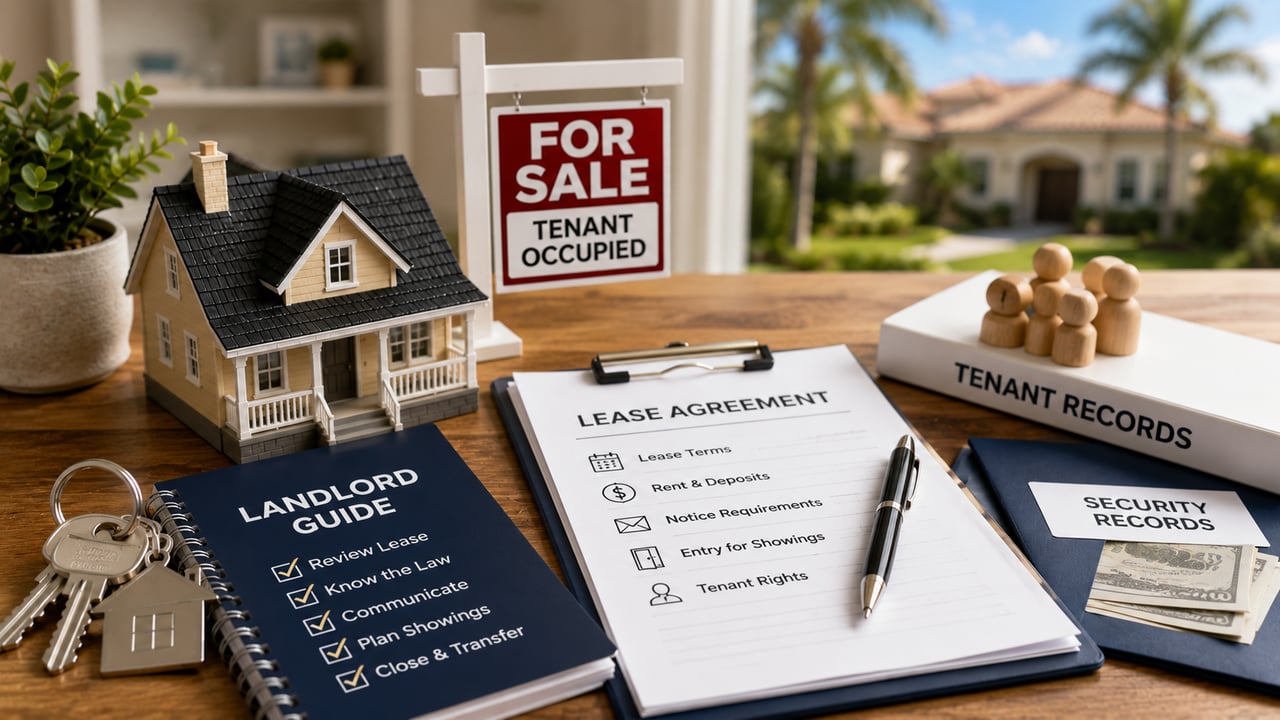
At closing, if the property is selling with the tenant in place, the seller needs to transfer to the buyer: the original signed lease agreement, the tenant's security deposit (held in a Florida-compliant manner), any prepaid rent, and documentation of the tenant's rental payment history. Florida law has specific requirements about security deposit handling during the sale of a rental property — the deposit must be transferred to the buyer with proper written notice to the tenant.
Ready to make your move in Southwest Florida? Let's talk.
Whether you're buying, selling, managing an estate, navigating a divorce, or just want a straight read on the market — I'm here for the conversation.
Call or text: 727.638.1704
Email: [email protected]
Or reach out at theabreugroup.com
— Daniel
Frequently Asked Questions
Q: Can I require my tenant to leave so I can sell the property vacant?
If the tenant has a fixed-term lease, you cannot force them to leave before the lease expires simply because you want to sell — you must honor the lease. If they are month-to-month, you can provide proper notice to terminate the tenancy. In either case, you can offer financial incentives for early voluntary departure — often called cash-for-keys arrangements — but you cannot legally compel a tenant with a valid lease to vacate.
Q: Can a buyer evict a tenant after closing if they want to move in?
A buyer who purchases a tenant-occupied property with an active fixed-term lease must honor that lease through its expiration. They cannot evict the tenant simply because they are the new owner and want to occupy the property. Once the lease expires and the tenant does not renew, the new owner can then take possession. In a month-to-month situation, the new owner can give proper notice after closing.
Q: Does a tenant-occupied home sell for less than a comparable vacant home?
Generally yes — tenant-occupied properties typically sell at a modest discount compared to vacant comparable homes because the buyer pool is smaller (primarily investors rather than all buyers), the showing experience is less controlled, and there is a transition period involved. The size of the discount depends on the lease terms, the tenant's cooperation level, and the rental income the property generates. I help landlord sellers price to reflect these realities accurately.
Q: What happens to the security deposit when I sell my rental property in Florida?
Under Florida Statute 83.49, when a landlord sells a rental property, the security deposit must be transferred to the buyer within 30 days of closing, along with written notice to the tenant identifying the new owner as the holder of the deposit. The tenant must receive written notice of the transfer. Failure to properly handle the security deposit transfer can create liability for the seller.