The SWFL Home Inspection Checklist: What to Look For in Florida's Climate
Home inspections in Southwest Florida are not the same as in the rest of the country. The heat, humidity, salt air, hurricanes, and subtropical biology create specific vulnerabilities that a good SWFL inspector will look for — and that every buyer should understand before they walk into their inspection period.
Why Florida Inspections Are Different
A lot of buyers relocating to Southwest Florida from the Northeast or Midwest assume a home inspection is a home inspection — same checklist, same process, same things to worry about regardless of geography. That assumption costs some of them significantly.
Florida's climate is hard on homes in ways that are genuinely different from cold-weather climates. The combination of intense sun, high humidity, salt air near the coast, frequent heavy rain, and the occasional hurricane creates a specific set of vulnerabilities that Florida-experienced inspectors know to look for — and that buyers need to understand before they finalize any purchase decision.
Here is what I walk every buyer client through before their inspection period begins.
The Roof: The Single Most Important Item in SWFL
Age, Condition, and Permits
I will say this plainly: the roof is the most important inspection item in Southwest Florida, full stop. Not just because of storm risk, but because of the insurance implications. As we covered in a recent post on Florida insurance laws, many carriers will not write a new policy on a home with a roof older than 15 to 20 years. Others will write it but charge significantly higher premiums. A home with a roof that needs replacement in the next two to three years is carrying a material liability that belongs in your negotiating calculus.
Your inspector should document the roof's age, material, overall condition, and any evidence of prior damage or improper repairs. Always ask to see the permits for any roof work — unpermitted roofing is not just a code issue, it is an insurance and resale issue.
Roof Type Matters for Insurance
Hip roofs (four sloping sides) perform better aerodynamically in wind events than gable roofs (two sloping sides with triangular ends) and typically qualify for better insurance rates through wind mitigation credits. If you are choosing between similar properties, roof geometry is worth factoring in.
Moisture, Mold, and Water Intrusion
The Hidden Enemy in Florida Homes
Moisture is the silent destroyer of Southwest Florida homes. The combination of high humidity, frequent rain, and homes that are sometimes closed up for months at a time creates ideal conditions for mold growth — particularly in areas with any history of water intrusion. Your inspector should look carefully for:
-
Evidence of past or current roof leaks — staining on ceilings and in attic spaces
-
Moisture intrusion around windows, doors, and exterior wall penetrations
-
Signs of standing water or drainage issues in the crawl space or under the slab if applicable
-
Mold growth in bathrooms, under sinks, in closets near exterior walls, and in any areas where air circulation is limited
If there is any evidence of moisture intrusion, a separate mold assessment by a licensed mold assessor — not the home inspector — is worth the additional cost before you commit to the purchase.
HVAC: The System That Works Hardest in Florida
Your air conditioning system in Southwest Florida runs more hours per year than in virtually any other region of the country. A system that might last 15 years in Minnesota may last 10 in SWFL due to the sustained workload. Your inspection should include:
-
The age of both the air handler and the compressor — these components have different lifespans and are often replaced independently
-
Evidence of proper maintenance — a system that has never had its coils cleaned or filters changed will show it
-
Verification that the system is sized appropriately for the square footage — undersized systems run constantly and fail early
-
Confirmation that ductwork is properly insulated, sealed, and free of pests or mold
A system that is 10 to 12 years old in Florida is approaching end of life. A $5,000 to $8,000 HVAC replacement in the near term is worth factoring into your offer.
Plumbing: Galvanized Pipes and Polybutylene
In homes built before roughly 1985, galvanized steel water supply pipes may be present — these are prone to internal corrosion and restricted flow and are generally recommended for replacement. In homes built between roughly 1978 and 1995, polybutylene pipes may be present — a material that became infamous for failure and has been the subject of class action litigation. Both are serious enough to warrant a negotiated price reduction or repair credit if present.
Cast iron drain lines — common in older SWFL construction — can corrode and collapse over time, particularly under slab foundations. A camera inspection of drain lines is a worthwhile additional investment for any home built before 1990.
The Four-Point Inspection: What It Covers and Why It Matters
A standard home inspection covers the full property, but many Florida insurance carriers also require a four-point inspection before writing a new policy. This inspection focuses specifically on four systems: the roof, electrical, plumbing, and HVAC. It is shorter and cheaper than a full home inspection but serves a different purpose — confirming to the insurer that these four systems meet minimum standards for coverage.
Always get a four-point inspection in addition to the full inspection, even if the seller has a recent one. Inspectors and insurance carriers have different standards, and having your own documentation is always better.
Additional Florida-Specific Items
-
WDO inspection: Wood-Destroying Organism inspection by a licensed pest control operator — checks for termites, wood-boring beetles, and wood-decaying fungi. Non-negotiable in Florida.
-
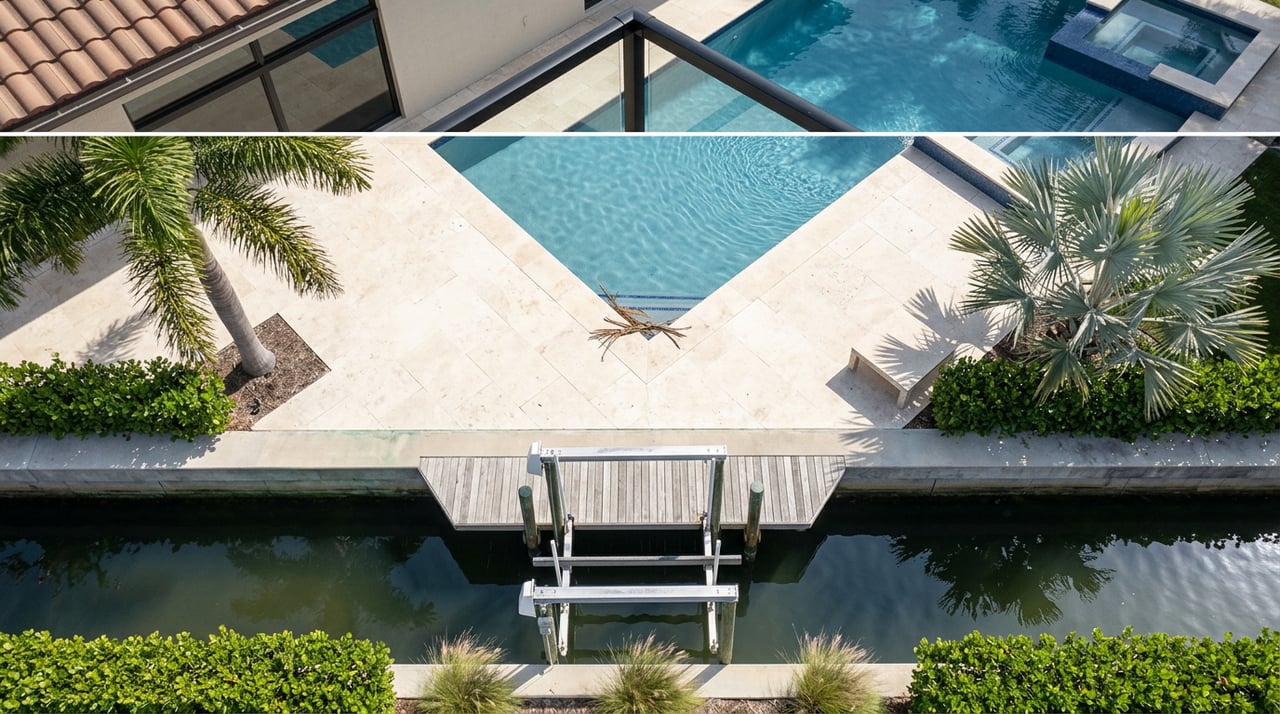
Seawall and dock inspection for waterfront properties: concrete seawalls deteriorate and fail; wood and composite docks require regular maintenance and have finite lifespans
-
Pool and enclosure inspection: cage condition, equipment age and function, surface condition, and any evidence of deck or foundation settlement
-
Radon testing: less commonly required in Florida than in northern states but increasingly requested, particularly in some inland areas
-
Wind mitigation inspection: this is your tool for getting insurance credits — it documents hurricane-resistant features that lower your premium
Ready to make your move in Southwest Florida? Let's talk.
Whether you're buying, selling, managing an estate, navigating a divorce sale, or just want a straight answer about the market — I'm here.
Call or text: 727.638.1704
Email: [email protected]
Or reach out at theabreugroup.com
— Daniel
Frequently Asked Questions
Q: How long does a home inspection take in SWFL?
For a typical 2,000 to 3,000 square foot single-family home, a thorough home inspection takes 3 to 4 hours. Larger homes, waterfront properties with docks and seawalls, and homes with pools will take longer. I always encourage my buyer clients to attend the inspection in person — walking through with the inspector is far more informative than reading the report afterward.
Q: What inspection findings are most commonly used to renegotiate in SWFL?
Roof condition and age, HVAC age and condition, evidence of water intrusion or mold, and major plumbing issues are the items that most commonly result in renegotiated price or seller credits in SWFL transactions. Minor maintenance items are generally expected in any used home and are less effective as negotiating leverage.
Q: Can I negotiate repairs or credits after the inspection?
Yes — in Florida, the inspection period typically gives you the right to cancel or renegotiate based on inspection findings. The standard approach is to request either a price reduction, a repair credit at closing, or specific repairs completed before closing. I help every buyer client prepare a strategic repair request that focuses on the items that matter most rather than creating a long list that puts sellers on the defensive.
Q: Should I get a home inspection on a brand new construction home?
Absolutely yes. New construction in SWFL has defects — sometimes significant ones — that the builder's own quality control misses. An independent inspection at or just before closing protects you and creates documentation that triggers the builder's warranty. A phased inspection during construction is even better if the timeline allows.