New construction purchases in Southwest Florida follow a specific timeline that differs significantly from resale transactions — more steps, longer duration, and more decision points along the way. Understanding this timeline before you sign helps you plan your life around the purchase rather than being surprised by it.
New Construction Is a Different Kind of Purchase
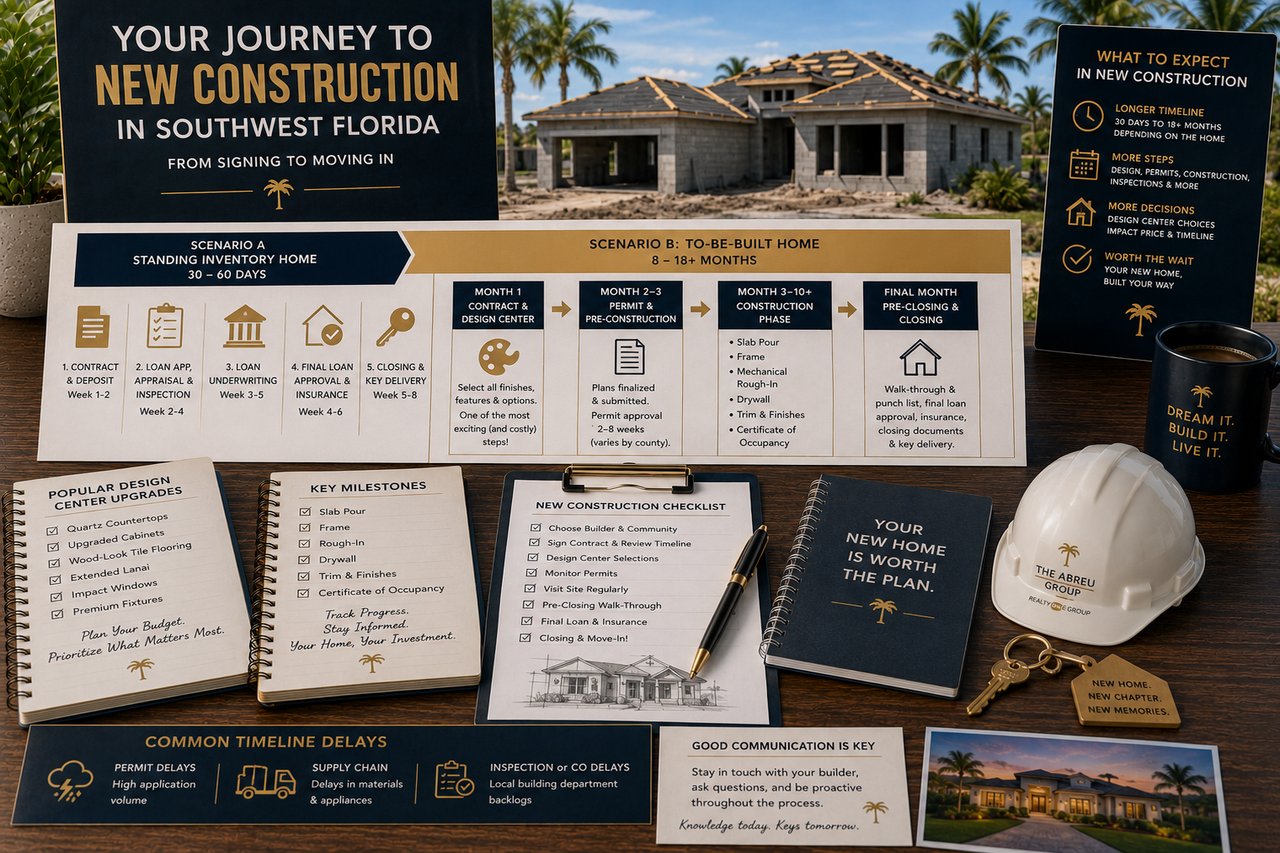
Buyers who have purchased resale homes before sometimes approach new construction with the same mental model: find it, offer on it, close in 30 to 45 days, move in. New construction does not work that way. Depending on whether you are purchasing a to-be-built home (a home that will be constructed after you sign) or a standing inventory home (a completed home the builder has not yet sold), the timeline can range from 30 days to 18 months.
Understanding the difference between these two scenarios — and the specific steps in each — prevents the frustration that comes from planning around a move-in date that turns out to be far further in the future than anticipated.
Scenario A: Purchasing a Standing Inventory Home
Timeline: 30 to 60 Days
A standing inventory home is one that the builder has already completed and is ready for immediate occupancy. These are the closest equivalent to a resale purchase in terms of timeline:
- Week 1 to 2: Sign the purchase contract, pay the initial deposit, and select your lender (builder's preferred or independent)
- Week 2 to 4: Complete the loan application, order the appraisal, complete the home inspection
- Week 3 to 5: Loan underwriting and conditional approval
- Week 4 to 6: Final loan approval, order homeowners insurance, schedule closing
- Week 5 to 8: Closing and key delivery
Standing inventory is the fastest path to occupancy in new construction and the scenario most comparable to a resale purchase timeline. Builders with standing inventory in 2026 are motivated to close quickly — which sometimes creates negotiating opportunities for incentives.
Scenario B: Purchasing a To-Be-Built Home
Month 1: Contract and Design Center
After signing the purchase contract and paying the initial deposit (typically 3 to 10 percent), the next major step is the design center appointment. This is where you select all the interior and exterior finishes for your home — flooring, countertops, cabinetry, fixtures, tile, and in many cases structural options (room configurations, added windows, extended garages). The design center appointment is one of the most exciting — and potentially most expensive — parts of the new construction process.
Buyers routinely underestimate how much the design center will add to their purchase price. Base prices for new construction typically include a relatively modest standard finish package. Upgrades to quartz countertops, wood-look tile flooring, upgraded cabinetry, extended lanais, and other popular selections can add $30,000 to $80,000 to the base price of a home in the $400,000 to $600,000 range. Budget carefully and prioritize upgrades that are either structurally important or difficult to change after the fact.
Month 2 to 3: Permit and Pre-Construction
After the design center selections are finalized and the plans are completed, the builder submits for building permits with the local municipality. In Lee and Collier Counties, permit review timelines vary from two to eight weeks depending on the current application volume. Construction cannot begin legally until the permit is issued. Delays in permitting — common during periods of high construction activity — extend the overall timeline.
Month 3 to 10 (or Longer): Construction
Once permitted, construction begins. For a standard single-family home in SWFL, the construction timeline from groundbreaking to certificate of occupancy runs approximately six to ten months depending on the builder, the complexity of the home, and the availability of labor and materials. Larger custom homes can take 12 to 18 months or more.
Key construction milestones that buyers should track:
- Slab pour: the concrete slab foundation is poured — this is one of the most significant milestones and a good opportunity for a phase inspection
- Frame: wall framing and roof structure are completed — the pre-drywall phase inspection happens here
- Mechanical rough-in: electrical, plumbing, and HVAC rough-in work before the walls are closed
- Drywall: walls are closed — interior work accelerates from this point
- Trim and finishes: cabinets, flooring, tile, plumbing, and electrical fixtures are installed
- Certificate of occupancy: the local building department inspects and issues the CO, confirming the home is legally habitable
Final Month: Pre-Closing Walk-Through, Financing, and Closing
As construction nears completion, several things happen in parallel:
- Pre-closing walk-through (also called the blue tape walk): you walk through the nearly complete home with the builder's representative and document any items that need correction before closing. This is your official punch list. Submit it in writing and confirm in writing when each item is addressed.
- Final loan application and appraisal: if rates have changed significantly since you signed, re-evaluate your financing options. The appraisal on a to-be-built home typically occurs when construction is complete.
- Homeowners insurance binding: bind your homeowners insurance before the closing date.
- Closing and key delivery: sign the loan documents, pay your remaining down payment and closing costs, and receive your keys.
The Most Common Timeline Delays and How to Manage Them
- Permit delays: contact your builder's project manager monthly for permit status updates once the application is submitted
- Material or supply chain issues: ask your builder for specific material selections that have been confirmed in stock before you select them in the design center
- Weather delays: SWFL summer weather — particularly during hurricane season — can delay exterior work; build buffer into your expectations
- Final inspection or CO delays: local building department backlogs can delay the certificate of occupancy by several weeks
Ready to make your move in Southwest Florida? Let's talk.
Whether you're buying, selling, investing, managing an estate, or navigating any real estate situation — I'm here for that conversation.
Call or text: 727.638.1704
Email: [email protected]
Or reach out at theabreugroup.com
— Daniel
Frequently Asked Questions
Q: Can I lock my mortgage rate during new construction?
Yes — though it costs money. Extended rate locks (6 to 12 months for a to-be-built home) are available from most lenders but carry a fee or a rate premium. Many new construction buyers use the builder's preferred lender specifically because builder-affiliated lenders often have extended lock options or construction-to-permanent loan products designed for this use case. Evaluate the total cost of the extended lock relative to the risk of rate movement before deciding.
Q: What if I want to change my design selections after I sign the contract?
Design changes after the contract is signed are possible in the early stages but become increasingly difficult and expensive as construction progresses. Changes during the design center phase are straightforward. Changes after framing typically require a change order with a cost premium. Changes after rough-in or during finishing phases may be impossible or very expensive. Make your selections thoughtfully during the design center appointment.
Q: How do I know if my new construction is on schedule?
Ask your builder's project manager for a construction schedule at the time of contract and request monthly updates against that schedule. Visit the property every two to three weeks during construction — you are entitled to reasonable access to your future home, and regular visits help you catch issues early and maintain awareness of the actual pace of construction.
Q: What happens if the builder goes bankrupt before my home is complete?
This is a real risk with smaller regional builders and a less significant one with established national builders. Protect yourself by: verifying the builder's bonding and license status with the Florida Department of Business and Professional Regulation; using a builder with a track record of completing projects; ensuring your deposit is held in escrow (not released directly to the builder) to the maximum extent the contract allows; and understanding the warranty and completion protections in your contract.