The 2026 Atlantic hurricane season runs June 1 through November 30, with the statistical peak in mid-September. For Southwest Florida homeowners — whether you live here year-round, own a second home, or are in the process of buying — preparation is not a one-time checklist. It is an ongoing commitment that protects your investment and your family. Here is what you need to know right now.
Southwest Florida and Hurricanes: The Honest Context
If you own property in Southwest Florida or are considering buying here, you already know that hurricane risk is part of the conversation. Hurricane Ian's landfall near Fort Myers in September 2022 was a stark reminder of what a major storm can do to the region — and it permanently changed how buyers, sellers, insurers, and builders think about risk in Lee and Collier County.
I want to be direct about this topic because I think it deserves honesty rather than the minimization it sometimes gets in real estate conversations. Southwest Florida is a beautiful, exceptional place to live and own property. It is also a coastal region in a hurricane zone, and anyone who owns here needs to take that seriously. The good news is that being prepared — genuinely prepared — makes an enormous difference in outcomes during and after a storm event.
The 2026 Season: What Forecasters Are Saying
Atlantic hurricane season forecasts for 2026 have continued the trend of above-normal activity that forecasters have projected in recent years, driven by elevated sea surface temperatures in the Atlantic basin and La Niña or neutral ENSO conditions that reduce the wind shear that tends to suppress storm development. While seasonal forecasts cannot predict whether any specific storm will affect Southwest Florida, an above-normal season increases the overall probability of significant storm events in the Gulf of Mexico.
The statistical peak of hurricane season is September 10th — the date when accumulated cyclone energy reaches its historic maximum. The period from mid-August through mid-October is when the Gulf of Mexico is warmest and when the atmospheric conditions most favor storm development and intensification. This is the window that SWFL homeowners should be most prepared for, and preparation should be complete well before it arrives.
The Homeowner Preparation Checklist
Insurance: Your First Line of Defense
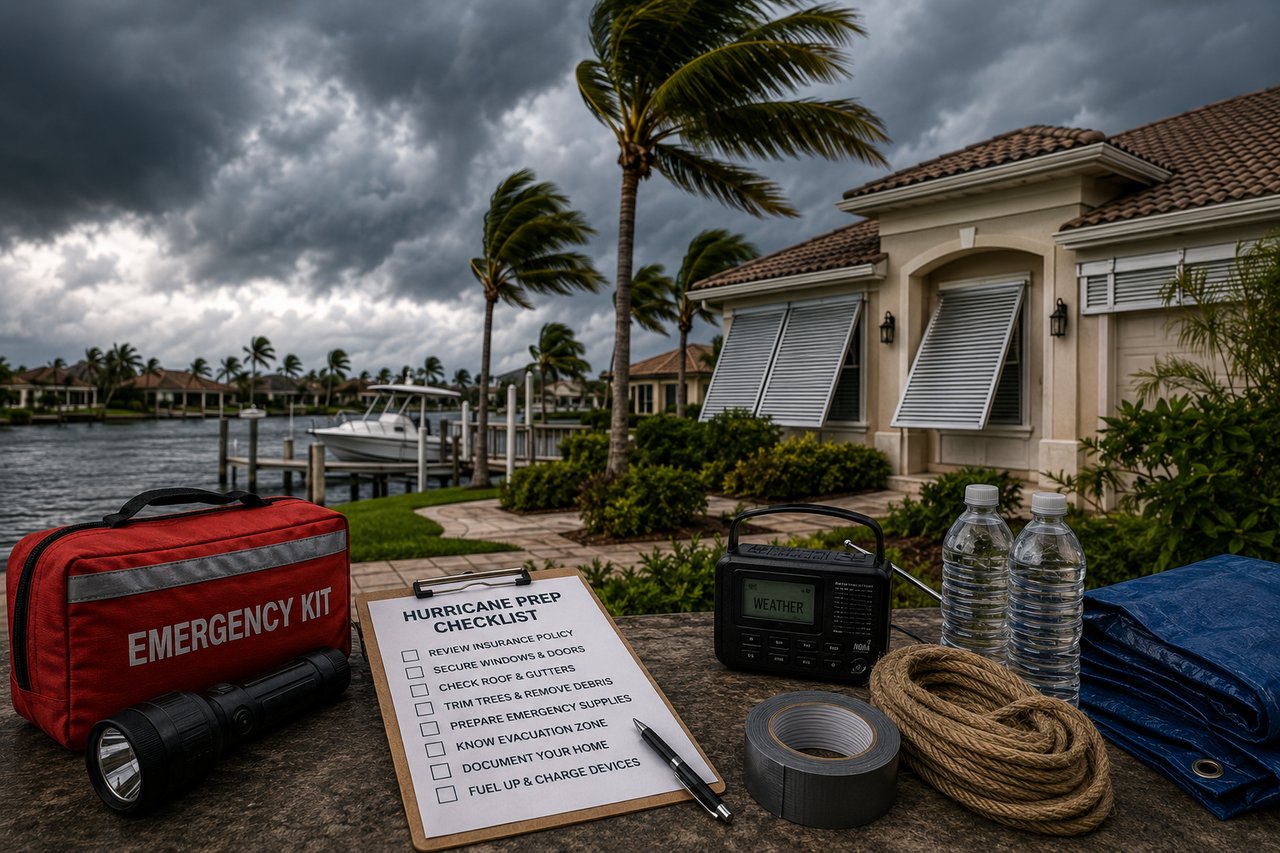
Review your homeowners insurance policy before hurricane season intensifies — ideally in June or July, not in September when a storm is already forming in the Gulf. Key things to confirm:
- Verify your dwelling coverage limit reflects the current replacement cost of your home — construction costs have increased significantly since many policies were written, and being underinsured at replacement cost is a real and common problem in SWFL
- Confirm your wind coverage — standard homeowners policies in Florida cover wind damage, but the specifics of your deductible (which is often a percentage of insured value, not a flat dollar amount, for hurricane-named storms) matter enormously in a claim situation
- Confirm your flood insurance is current and the policy limits are adequate — flood insurance is separate from homeowners insurance and covers rising water, which is often the primary damage mechanism in a major storm
- Know your insurance agent's after-hours contact number and understand how to initiate a claim — in the chaotic aftermath of a significant storm, having this information memorized or documented somewhere accessible saves critical time
Physical Preparation of the Property
The physical preparation of your home is your second line of defense:
- Hurricane shutters or impact-resistant windows and doors: if you do not have impact windows, ensure your storm shutters are in working order — hardware checked, operation confirmed, panels accounted for — before the season peaks
- Roof inspection: have a licensed roofer inspect your roof if it has not been inspected since Hurricane Ian. Identify any areas of concern and address them before a storm rather than filing a claim after
- Garage door: the garage door is statistically the most vulnerable point of failure in a home during high winds. If yours is not hurricane-rated, consult with a contractor about a bracing kit or replacement
- Trim trees and remove dead branches near the structure — flying debris from trees is a primary source of damage in Florida storms
- Know where your main water, gas, and electrical shutoffs are and how to operate them
- Document your home's contents with a video walkthrough stored in cloud backup — this documentation is invaluable in the insurance claim process
For Second Home and Seasonal Residents Who Are Not Present
If you own a property in Southwest Florida and do not live here year-round, the hurricane season management question is one of the most important practical considerations of your ownership. You need a trusted local contact — a neighbor, a property manager, or a property management company — who has your authorization and your hurricane preparation plan and can execute it on your behalf when a storm approaches. This is not optional. A home that has not been prepared when a storm hits is exponentially more vulnerable to damage than one that has been properly closed up.
I strongly recommend that all out-of-area property owners engage a local property manager who includes hurricane preparation services in their scope. The cost is far less than the preventable damage from an unprepared property in a storm event.
For Buyers: What Hurricane Risk Means for Your Purchase Decision
If you are in the process of buying in SWFL, hurricane risk is a legitimate factor in your decision — but it should be evaluated with precision rather than avoided as a category. Here is what to assess for any specific property:
- Flood zone designation and Base Flood Elevation — higher elevation properties in lower-risk flood zones are meaningfully different from properties at or below Base Flood Elevation
- Construction vintage — homes built after 2002 in Florida were built to significantly stronger building codes than homes built before Hurricane Andrew in 1992; post-Ian construction is stronger still
- Roof age and type — hip roofs built after 2002 with modern attachment hardware are dramatically more resistant to wind damage than older gable roofs with inadequate hardware
- Storm shutter or impact window coverage — a home with full impact protection is in a different risk category from one without it
For Sellers: Hurricane Preparedness as a Selling Point
For sellers in the current SWFL market, the physical resilience features of your home are genuine marketing assets — not just compliance checkboxes. A new roof, impact windows, a hip roof geometry, and a generator are all features that today's informed SWFL buyers specifically look for and are willing to pay for because they understand the insurance and peace-of-mind implications. Make sure your listing prominently features these elements.
Ready to make your move in Southwest Florida? Let's talk.
Whether you're buying, selling, investing, managing an estate, or just want a straight read on the market — I'm here for that conversation.
Call or text: 727.638.1704
Email: [email protected]
Or reach out at theabreugroup.com
— Daniel
Frequently Asked Questions
Q: When should I complete my hurricane preparation in SWFL?
Ideally before June 1st, but realistically the most important preparation window is June and July — before the statistical peak of hurricane season in September. If you have not inspected your shutters, reviewed your insurance, or addressed any outstanding maintenance issues by August, do it immediately. Waiting until a storm is in the Gulf to prepare creates both safety risks and contractor availability problems.
Q: Does homeowners insurance in Florida automatically cover hurricane damage?
Florida homeowners insurance policies cover wind damage from hurricanes, but there are important nuances. Hurricane deductibles are typically calculated as a percentage of your insured dwelling value — often 2 to 5 percent — rather than a flat dollar amount. On a $600,000 insured value with a 2 percent hurricane deductible, your out-of-pocket before insurance pays is $12,000. Understanding your specific deductible structure before a storm — not after — is essential.
Q: What is the difference between wind damage and flood damage in a hurricane?
Wind damage — to the roof, windows, exterior walls, and interior caused by wind-driven rain entering through a compromised envelope — is covered by your homeowners insurance wind coverage. Flood damage — rising water that enters the home from ground level — is only covered by a separate flood insurance policy through NFIP or private carriers. In a major hurricane, both types of damage can occur, and having both policies is essential in SWFL's coastal market.
Q: If I'm buying a home post-Ian in Cape Coral or Fort Myers, what should I look for?
Post-Ian rebuilds and renovations vary enormously in quality. Request permits for all post-Ian repair work — permitted work was inspected to code, unpermitted work was not. Get a four-point inspection even on recently renovated homes to confirm the work was done properly. Ask specifically about the roof replacement date, the permit number, and the roofing contractor who did the work. These details matter for both insurance and for your peace of mind.