The ROI of a Pool in Southwest Florida: Does It Actually Add Value?
In Southwest Florida, a pool adds meaningful value to a home — but not a dollar-for-dollar return on the cost to install it. The real value is in marketability, days on market, and buyer appeal. Here is the full picture with real numbers and the factors that determine whether your pool is an asset or just a feature.
This Is One of the Most Common Questions I Get From Sellers
Every seller who has a pool wants to know: how much is this worth? And every seller who is thinking about adding a pool before listing wants to know: is it worth doing? These are both fair questions, and the answers in Southwest Florida are more nuanced — and more favorable — than in most other markets in the country.
Here is the thing about pools in Florida that makes SWFL different from, say, Ohio or Minnesota: a pool here is not a luxury addition. It is a baseline expectation in the luxury and move-up market, and it is a strong competitive advantage in the entry and mid-market. The question is not whether pools add value — they do — but how much, under what conditions, and whether adding one before selling pencils out financially.
What the Data Says About Pool Value in SWFL
The Percentage Premium
In the Southwest Florida market, homes with pools consistently sell at a premium over comparable homes without pools. The premium varies by price range, neighborhood, and the quality of the pool itself, but across most market segments the premium runs:
-
Entry and mid-market ($300K to $600K): pool homes typically command a $25,000 to $50,000 premium over comparable non-pool homes, representing roughly 5 to 10 percent of purchase price
-
Move-up market ($600K to $1.2M): pool premium is generally $40,000 to $80,000, particularly when the pool includes a spa, cage, and outdoor kitchen setup
-
Luxury market ($1.2M+): a basic pool is essentially expected and priced in; the premium comes from the quality and design of the outdoor living space — a $50,000 basic pool may add $40,000 of value while a $200,000 resort-style pool-spa-outdoor kitchen setup may add $150,000 to $200,000 in perceived value
The Marketability Factor — More Important Than the Price Premium
Here is the number that I find even more compelling than the price premium: in the SWFL market, pool homes sell significantly faster than non-pool homes in comparable condition and price. A home without a pool frequently receives buyer feedback like 'we love the home but wish it had a pool' and simply does not get offers from a meaningful segment of motivated buyers.
In a market where buyer pools are segmented — where a large percentage of buyers specifically search for pool homes and will simply skip over non-pool listings — the value of a pool is also measured in the number of buyers competing for your property. More competition means faster sales and less negotiating leverage for buyers.
The Cost to Add a Pool Before Selling: Does It Pencil?
What a New Pool Costs in SWFL Right Now
Pool construction costs in Southwest Florida in 2026 have settled somewhat after the post-pandemic surge, but they remain elevated compared to pre-2020 levels. A basic concrete pool with screen enclosure, no spa, basic decking, and standard equipment runs $60,000 to $85,000 in most SWFL markets. A pool with a spa, upgraded decking, a cage with picture frame screens, and standard lighting runs $90,000 to $130,000. A resort-style setup with water features, sun shelf, beach entry, outdoor kitchen, and premium equipment can run $150,000 to $250,000 or more.
The ROI Calculation
On a $475,000 home in Fort Myers or Bonita Springs, a basic pool at $70,000 that adds $40,000 of value to the sale price is a negative ROI on paper — you spent $70,000 and recovered $40,000. That is a net cost of $30,000.
But the full picture is more complicated than that single transaction math. Consider:
-
If the pool allows you to list at $515,000 instead of $475,000 and you attract more buyers, close faster, and avoid the carrying costs of a longer listing period, the all-in economic picture may be different
-
If you have been living in the home for several years before selling, the enjoyment value of the pool during your ownership period is real and worth factoring in
-
If the competition in your neighborhood is heavily pool-home dominated and your home is the only listing without one, the competitive disadvantage may be larger than the average premium suggests
My general advice: adding a pool specifically for resale in the short term is usually not a dollar-positive decision. But if you are planning to stay in the home for two or more years before selling, the combination of lifestyle value and market premium makes it more defensible.
If You Already Have a Pool: Maximizing Its Value at Listing
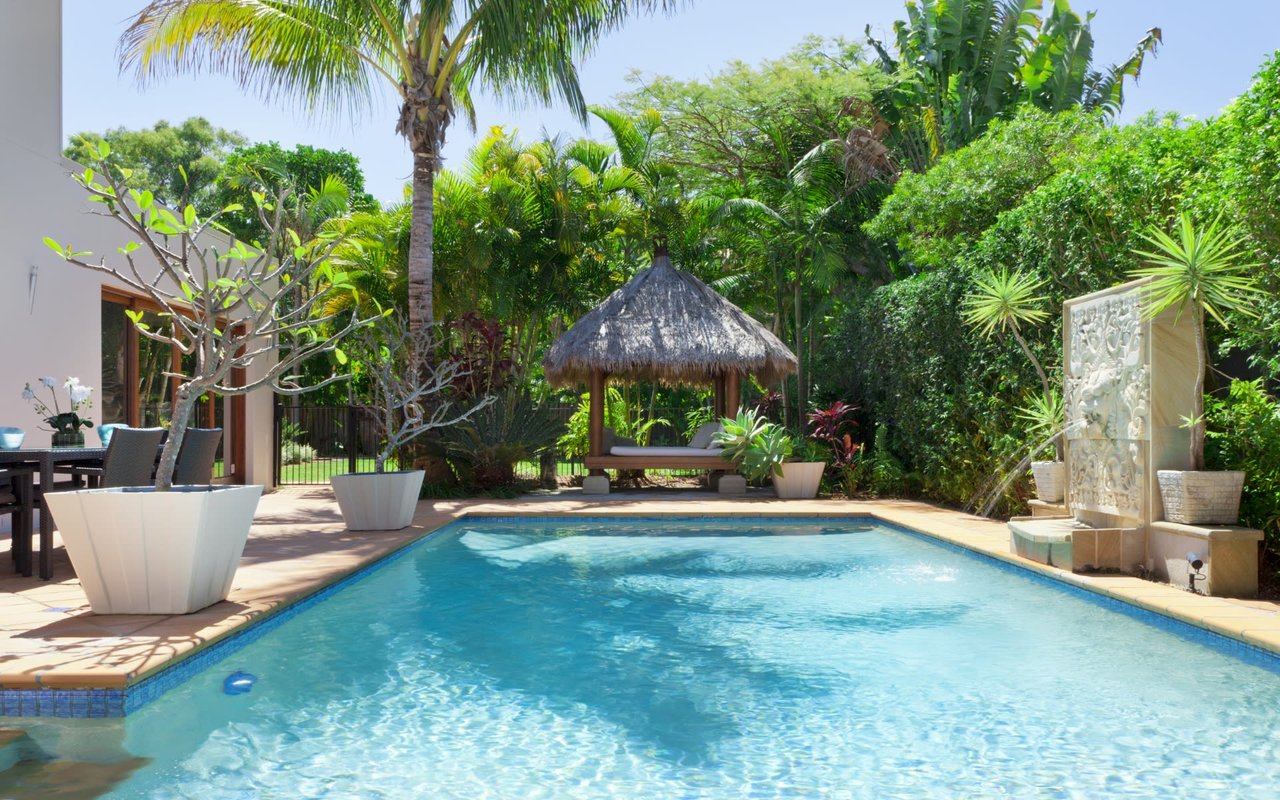
If you are selling a home with a pool, the condition and presentation of that pool matters enormously for the value it adds. A clean, well-maintained pool with a functioning cage, updated equipment, and attractive decking is a strong asset. A green pool, a damaged cage, outdated equipment, or worn decking is a negotiating liability.
Before listing, I always recommend sellers with pools:
-
Have the pool serviced and chemically balanced — buyers notice water color and clarity immediately
-
Repair or replace any damaged cage screening — even a few torn panels signal neglect
-
Power wash the pool deck and surrounding areas
-
Service the pool equipment and have documentation that everything is functioning properly
-
Consider resurfacing if the plaster is stained or worn — a resurfaced pool in good condition is a legitimate selling point and typically costs $5,000 to $10,000
The Rental Market Angle: Pools and Short-Term Rental Income
For buyers and sellers evaluating pool value from an investment or rental perspective: in the SWFL short-term rental market, a private pool is one of the single most impactful amenities for both rental rate and occupancy. Properties with private pools in vacation rental markets like Naples, Marco Island, Fort Myers Beach, and Cape Coral command 20 to 40 percent higher nightly rates than comparable non-pool properties. For investors, the ROI calculus on a pool is much more favorable when rental income is part of the equation.
Ready to make your move in Southwest Florida? Let's talk.
Whether you're buying your first home, managing an estate, hunting for an investment property, or just trying to figure out what you can actually afford in this market — I'm here for that conversation.
Call or text: 727.638.1704
Email: [email protected]
Or reach out at theabreugroup.com
— Daniel
Frequently Asked Questions
Q: Does a pool affect homeowners insurance in Florida?
Yes. A pool, particularly an uncaged pool, can affect your liability coverage and may increase your homeowners insurance premium. Most insurance carriers require specific safety features — fence, self-closing gate, or a cage — to maintain standard coverage terms. A pool cage also provides a meaningful wind mitigation benefit that can partially offset the insurance impact. Discuss with your insurer before adding a pool.
Q: What is the difference between a pool cage and no cage in SWFL?
A pool cage — the aluminum and screen enclosure common throughout SWFL — keeps out debris, insects, and provides a safety barrier. It also extends the pool equipment's life by reducing sun and weather exposure. In the SWFL market, a caged pool is generally expected and preferred. An uncaged pool may be seen as a negative by buyers who do not want to deal with the maintenance and debris of an exposed pool.
Q: How often does a pool need to be resurfaced in Florida?
Plaster pool surfaces typically last 10 to 15 years in Florida before they need resurfacing. The intense sun, high chemical usage, and mineral-heavy water in SWFL accelerates wear compared to northern climates. A pool that needs resurfacing in the next few years should be disclosed to buyers and factored into pricing or negotiation.
Q: Is a saltwater pool more valuable than a chlorine pool in SWFL?
Saltwater pools have become strongly preferred by buyers in SWFL — they are gentler on skin and eyes, easier to maintain, and perceived as a higher-end amenity. Converting an existing chlorine pool to saltwater costs relatively little ($1,500 to $3,000 for the salt system) and can be a worthwhile pre-listing upgrade if the existing equipment supports it.