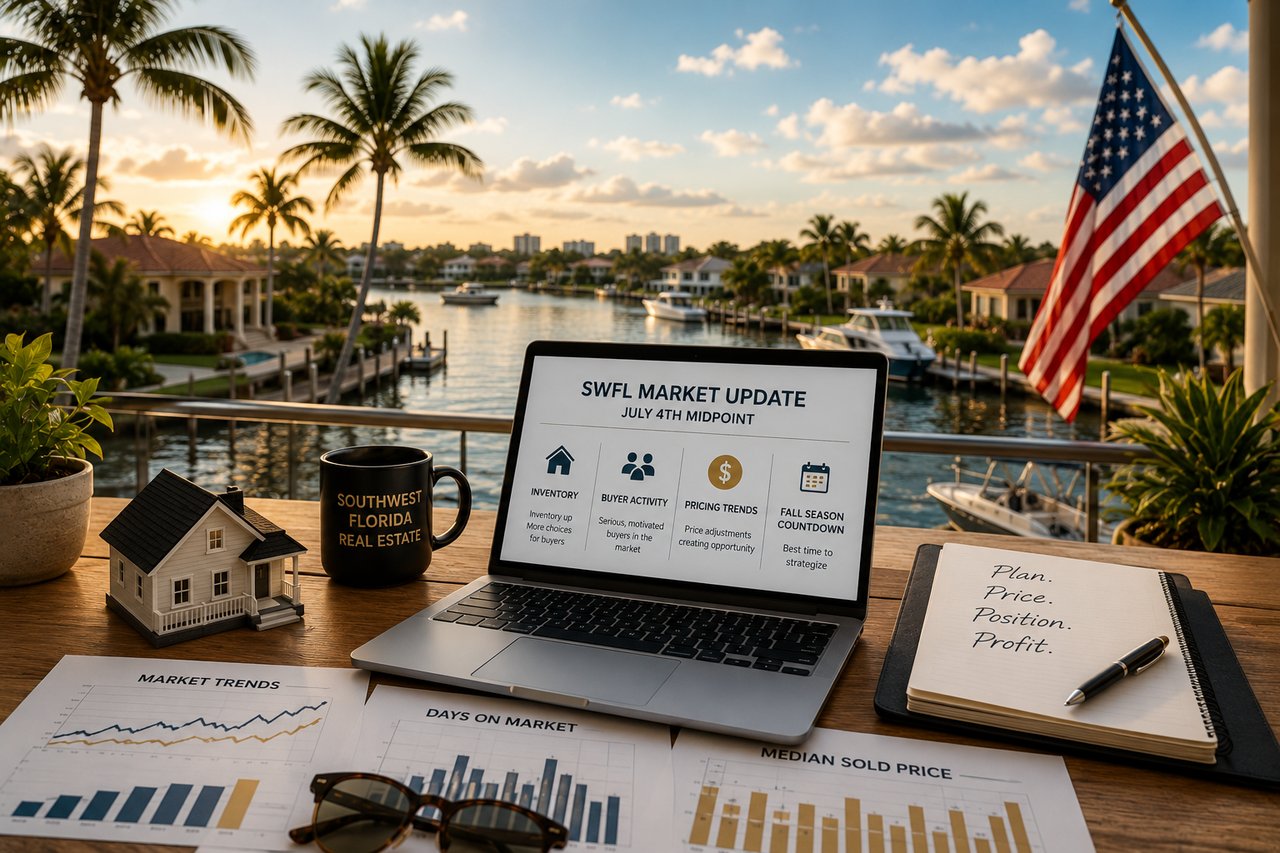
The 4th of July weekend sits at the midpoint of SWFL's summer real estate market — after the spring season wind-down and before the fall re-ignition. What happens in the weeks around the holiday is actually a useful signal about where the market is heading. Here is what I am seeing and what it means for buyers and sellers heading into the second half of 2026.
Why Independence Day Is a Real Estate Market Inflection Point
I know it seems unusual to treat a holiday weekend as a market signal. But in Southwest Florida's distinctly seasonal real estate market, the summer calendar has a predictable rhythm that makes certain moments genuinely informative about market direction.
The spring season winds down in late April and May as the snowbird population departs. June is a transition month — motivated sellers who did not close during season are repricing and relisting; buyers who are moving to SWFL for job or lifestyle reasons remain active regardless of the calendar. Then Independence Day weekend hits, and in the weeks following it, something consistent happens: the market makes its case for the rest of the summer.
Buyers and sellers who act in July and August tend to be the most motivated on both sides. This creates a specific market dynamic that is worth understanding if you are considering any real estate move in SWFL right now.
What the Market Looks Like at the July 4th Midpoint
Inventory: What Has Accumulated and What Is New
By the first week of July, SWFL's listing inventory has been building for several months — homes that listed in March and April and did not sell during the peak spring season, homes that re-entered the market after brief withdrawals, and new listings from sellers motivated by summer timelines rather than seasonal strategy.
The inventory that has been sitting since spring is the most negotiable product in the market. Every additional week on the market increases seller motivation, and sellers who listed in March and are still on market in July have typically already processed the emotional stages of pricing adjustment. They are more pragmatic and more deal-ready than they were 90 days ago.
New summer listings are a different story — these are sellers who chose the off-season deliberately, often because they have a specific timeline driving the sale. Estate sales, relocations, and divorce situations continue to generate new inventory through the summer regardless of seasonality, and this product comes to market with fresh motivation.
Buyer Activity: The People Who Are Actually Looking Right Now
Summer buyers in SWFL are not casual browsers. The people actively searching for homes in July are serious buyers with specific, actionable motivations:
- Families relocating for jobs or lifestyle changes who need to be in place before September
- Remote workers who have made the decision to leave their current city and are on a real timeline
- Investors looking to capitalize on motivated summer sellers with less competition from other buyers
- Retirees who made the decision over the winter and are acting in the summer rather than waiting for next season
The absence of casual lookers — the tourists and snowbirds who attend open houses in January without any immediate intent — means that summer showing activity is a higher-quality signal of actual buyer intent than peak-season activity. Fewer showings, but higher conversion rate from showing to offer.
The Fall Season Countdown: Why July Matters for Sellers
Here is the timing reality that every SWFL seller should understand: the real estate season in Southwest Florida starts its re-ignition in October, with serious buyer activity picking up meaningfully from November through January. That means sellers who are not under contract by September are essentially deciding to compete in the full season market — which means more competition from other listings, more pressure on pricing, and a different buyer profile.
For sellers who have been on the market since spring without success, the July through September window is decision time. Either reprice aggressively enough to generate offers in the summer market, or come off the market, reset, and relaunch for season with a fresh strategy. There is no benefit to sitting on an unsold listing through the summer and into fall carrying accumulated days on market.
What Buyers Should Do With the Summer Market
If you are a buyer in SWFL right now, Independence Day weekend is a reminder that you are in one of the best buying environments of the recent market. Here is why:
- Motivated sellers: the homes that have been on market since spring are priced to sell by sellers who are increasingly done waiting
- Less competition: you are not competing against the seasonal buyer wave that arrives in November
- Negotiating leverage: summer buyers regularly get price reductions, seller concessions, and closing terms that would not be available in January
- Genuine urgency offset: in a hot season market, buyers sometimes make rushed decisions because of competition pressure. Summer gives you time to be thorough — inspect carefully, review documents properly, and make confident decisions
My Mid-Summer Market Assessment
Heading into the second half of 2026, the SWFL market continues to reward preparation and penalize wishful thinking. Sellers who priced correctly and presented well are closing transactions. Sellers who are holding at aspirational prices are accumulating days on market that will become a more serious liability as the fall season approaches.
For buyers, the summer market offers a genuine window of opportunity that will narrow when season traffic returns in the fall. The combination of motivated sellers, available inventory, and reduced competition does not last indefinitely — it is a seasonal gift with an expiration date.
Enjoy the holiday weekend. And if you are thinking about making a real estate move in Southwest Florida in the next six months, the best time to start that conversation is now — not after October, when everyone else starts having it.
Ready to make your move in Southwest Florida? Let's talk.
Whether you're buying, selling, investing, managing an estate, or just want an honest read on the market — I'm here for that conversation.
Call or text: 727.638.1704
Email: [email protected]
Or reach out at theabreugroup.com
— Daniel
Frequently Asked Questions
Q: Is now a good time to buy in SWFL before season?
Yes — July through September offers buyers the best combination of motivated sellers, reduced competition, and negotiating leverage that they will see until next summer. The inventory that has been sitting since spring is the most negotiable product in the market, and new summer listings from estate sales, relocations, and other motivated sellers come in with fresh urgency.
Q: Should I wait until after Labor Day to list my home in SWFL?
If your home is not under contract by mid-September, listing in October is generally smarter than listing in August — you will benefit from the season traffic ramp-up. However, if your home needs to sell this year, the summer window is valuable and should not be wasted. Every month of continued carrying costs on an unsold property is expensive, and motivated summer buyers are real.
Q: How does the SWFL summer market compare to the winter season market?
Summer has lower overall transaction volume but higher seller motivation per active listing. Winter season has higher transaction volume, more buyer traffic, and often more competition between buyers for the best-priced properties. Neither is universally better — the right time to transact is when it aligns with your specific situation, not when the market is busiest.
Q: What does the SWFL market typically do in September and October before season?
September is typically the quietest month of the SWFL real estate year — late summer heat and low buyer traffic. October marks the beginning of the re-ignition as snowbirds and seasonal residents return and begin the process of making housing decisions. By November, the market has meaningfully more activity than September. Sellers who want season traffic should be listed and settled by October 1st at the latest.